

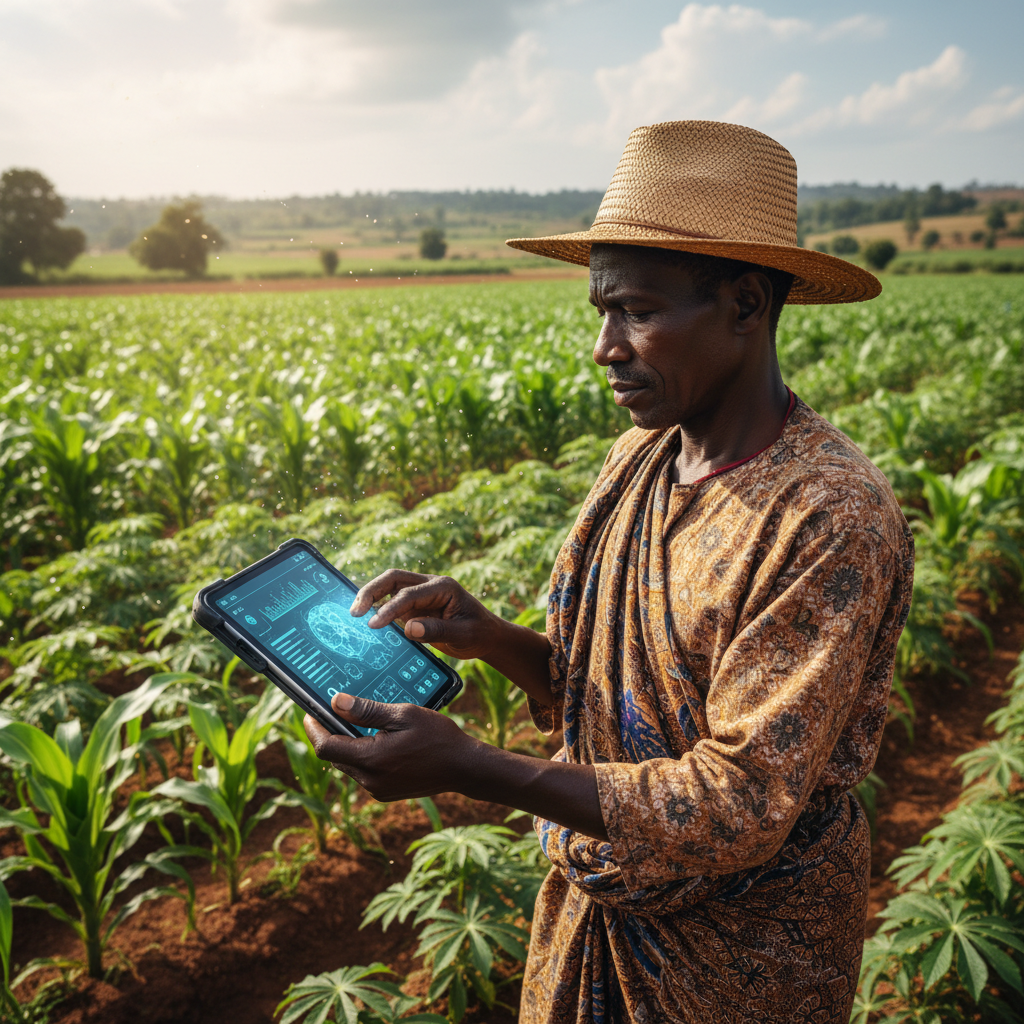
Nigeria's agricultural sector is undergoing a quiet revolution. Across the country's diverse farming regions — from the fertile plains of Benue to the river basins of Kebbi — a new generation of farmers is adopting smart technology to transform how they grow, harvest, and sell their produce.
The Rise of Precision Agriculture
Precision agriculture uses data-driven tools to optimise every aspect of farming. Soil sensors now measure moisture levels, pH, and nutrient content in real time, allowing farmers to apply exactly the right amount of water and fertiliser where it's needed. This targeted approach reduces waste, lowers costs, and significantly improves yields.
In Kaduna State, smallholder maize farmers working with agricultural cooperatives have reported yield increases of up to 40% after adopting soil monitoring technology. "Before, I was guessing," says one farmer. "Now the sensor tells me when my soil is thirsty. I use less water and grow more."
Drones and Remote Sensing
Agricultural drones are becoming increasingly accessible to Nigerian farmers. These unmanned aerial vehicles can survey hundreds of hectares in a single flight, identifying crop stress, pest infestations, and irrigation gaps that would take weeks to detect on foot.
Several agri-tech startups are now offering drone-as-a-service models, where farmers pay per hectare surveyed rather than purchasing expensive equipment outright. This subscription approach has democratised access to aerial intelligence for smallholder farmers who previously had no way to monitor large plots efficiently.
Digital Market Connections
Perhaps the most transformative shift is in how farmers connect with buyers. Platforms like SmartMarket9ja are eliminating the layers of middlemen that have historically consumed much of the farmer's profit margin. By connecting farmers directly with vendors, retailers, and consumers, digital marketplaces ensure that more of the value created on the farm stays with the farmer.
Real-time price data is another game-changer. Farmers who previously had no visibility into market prices were often forced to accept whatever a local buyer offered. Today, a farmer in Plateau State can check commodity prices in Lagos, Abuja, and Port Harcourt before deciding where to sell.
Challenges and the Road Ahead
Despite the progress, significant challenges remain. Reliable internet connectivity is still limited in many rural farming communities. The cost of smart devices, while falling, remains a barrier for the poorest farmers. And digital literacy programmes are needed to help older farmers adopt new tools confidently.
The Nigerian government's Agricultural Transformation Agenda and various state-level initiatives are beginning to address these gaps, but private sector innovation — and platforms that make technology accessible and affordable — will be the real engine of change.
The future of Nigerian agriculture is smart, connected, and data-driven. And it's arriving faster than most people expected.